

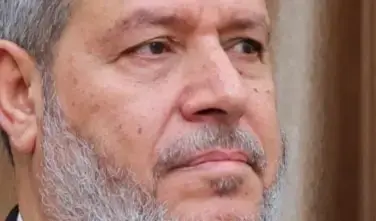
Israel's response to Khalil Al-Hayya's election as head of the Hamas political bureau was swift. It placed him at the top of its assassination list. He succeeds the martyred Yahya Sinwar.
In the Israeli security cabinet's view, the aftermath of Al-Aqsa Flood operation was expected to produce leaders who would abandon what Israel considers Hamas' "radical" current in favor of a more pragmatic leadership suited to the post-war reality. Al-Hayya's election delivered the opposite message.
The vote was not only an internal endorsement of the legitimacy of Al-Aqsa Flood. It also reaffirmed Hamas' regional political alignment at a time when much of the Arab media portrays the axis of resistance as a sinking ship.
Held under exceptionally difficult security conditions, the internal elections saw Al-Hayya defeat Khaled Meshaal. The vote completed the current leadership cycle after Hamas lost much of its first generation of leaders and Shura Council members during the war, including political bureau chiefs Ismail Haniyeh and Yahya Sinwar, as well as most of Gaza's political bureau.
During the leadership vacancy, Al-Hayya remained Hamas' leader in Gaza, headed its ceasefire negotiating delegation, and served on a temporary leadership council alongside Meshaal, West Bank chief Zaher Jabarin, Secretary Nizar Awadallah, and Shura Council chairman Muhammad Darwish.
"Abu Osama" needed little campaigning to win the confidence of Hamas' electoral base. To many within the movement, he is the guardian of its sacrifices. He offered four sons and dozens of relatives in the course of Hamas' resistance.
Born in Gaza City's Shuja'iyya neighborhood in 1960, Al-Hayya joined Hamas at its founding in 1987. Before that, he was among the first figures to establish the Islamic Association and the Muslim Brotherhood network in Gaza, from which Hamas later emerged.
He survived an assassination attempt in Doha in September 2025 that killed his son Homam and three aides. He later lost his fourth son, Azzam, in an Israeli strike alongside a Qassam Brigades fighter after Israel targeted his sons to pressure him during ceasefire negotiations.
In the worldview of Islamist movements, however, blood carries greater weight than political calculation. At a moment Hamas sees as existential, the movement needs someone who safeguards its sacrifices, not someone who invests in them or in the resistance's weakness to validate a more "realistic" course.
The latest attempt on Al-Hayya's life was not the first. In 2007, he lost more than 11 family members. In 2014, an Israeli strike on the home of his eldest son Osama killed Osama, his wife, and three of their children.
Ultimately, Al-Hayya's election is viewed as evidence of Hamas' organizational vitality despite the losses it has suffered and the relentless pursuit of its leaders.
Those close to the "father of the four martyrs" describe him as resolute, stubborn, and free of any desire to dominate decision making. A Hamas source who knew him closely said the years of loss and pursuit transformed life, in Al-Hayya's eyes, into "a journey, a mission, and a heavy trust," while organizational responsibilities left little room for personal ambition.
"Abu Osama became, during the Flood, especially after the loss of the senior leaders, a devoted and self-sacrificing father who feels for everyone, and whose children are all the sons of the movement, bound to him by loyalty, affection, and devotion," the source said. "The reality left by the genocide, and the storms battering a movement facing eradication, made choosing Al-Hayya a decision to hold fast to the roots, whatever the challenges."
Within Hamas, Al-Hayya is regarded as the voice of Gaza and what remains of it. He is considered the leader most attuned to the Strip's conditions. He rose through local leadership positions in Gaza City before leading the movement across the Strip and later joining its top leadership. He also spent much of his career alongside Hamas' military commanders, including Ahmed Al-Jaabari, Izz Al-Din Al-Haddad, and Mohammed Deif.
He was one of the few Hamas leaders regarded as Sinwar's equal and among those Sinwar instructed to leave Gaza months before October 7.
Regionally, Al-Hayya is identified as one of the architects of Sinwar's pre-"Al Aqsa Flood" strategy to strengthen ties with all components of the axis of resistance, including the former Syrian government. Hamas sources say Al-Hayya and Saleh Al-Arouri helped elevate relations with Hezbollah and the wider axis into a strategic alliance.
Ultimately, Al-Hayya's election is viewed as evidence of Hamas' organizational vitality despite the losses it has suffered and the relentless pursuit of its leaders. It reaffirms Gaza's central place in the movement's leadership and its strategic weight in both Hamas' internal balance and the broader Palestinian national cause. It also signals an unwavering commitment to the same path of resistance and to the movement's political approach, delivering a message of defiance against efforts to dismantle Gaza, erode its centrality, and end its resistance.
This is an edited translation for a report published in Arabic.